Answer:
{(3, –1), (7, 1), (–6, –1), (9, 1), (2, –1)}
Step-by-step explanation:
For the given collection to be classified as a function, each x-coordinate must correspond to just a single y-coordinate, meaning each x-value must have a distinct y-value.
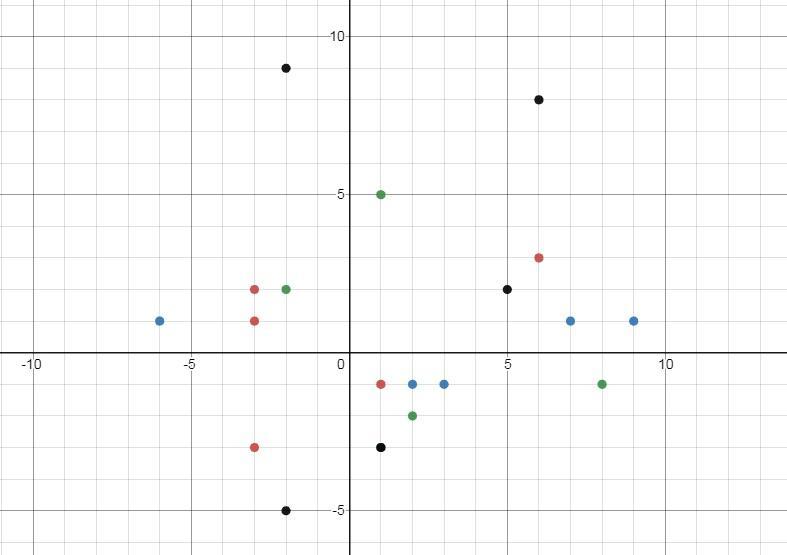
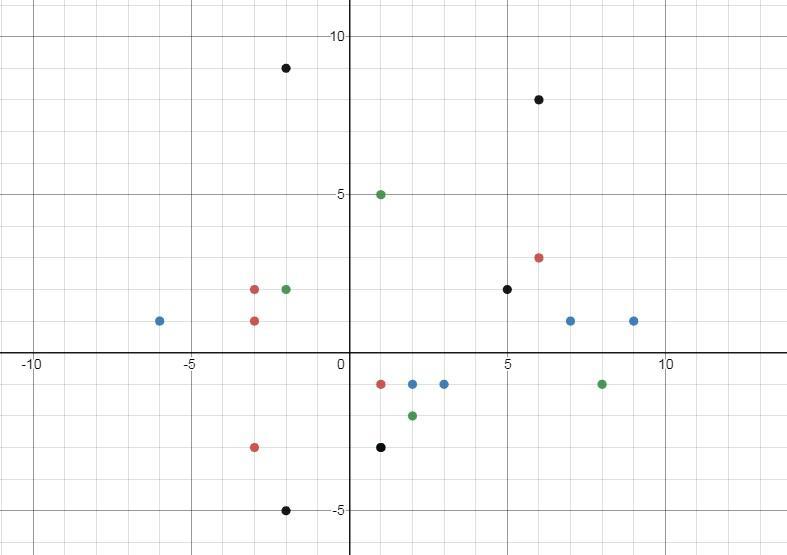
In this instance, the image illustrates the graphical depiction of each set, distinguished by color.
{(2, –2), (1, 5), (–2, 2), (1, –3), (8, –1)} -> Green points
{(3, –1), (7, 1), (–6, –1), (9, 1), (2, –1)} -> Blue points
{(6, 8), (5, 2), (–2, –5), (1, –3), (–2, 9)} -> Black points
{(–3, 1), (6, 3), (–3, 2), (–3, –3), (1, –1)} -> Red points
The graph reveals that the only set possessing a single y-value for each x-value is the second one (Blue points).