Response:
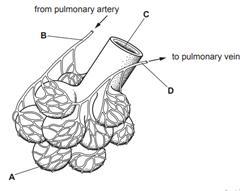
W - Aids in air movement through expansion and contraction, X - Catches dust and assists in filtering inhaled air, Y - Ensures the windpipe remains open, Z - Facilitates gas exchange.
Clarification:
The diaphragm, separating the thoracic cavity from the abdomen, serves as the primary respiratory muscle. When contracted, it expands the lungs during inhalation, allowing air intake. The nasal cavity’s role is to warm, moisten, and filter the incoming air before it reaches the lungs. Hairs and mucus in the nasal cavity trap dust, mold, pollen, and other environmental pollutants before they can infiltrate the body's inner sections. The trachea, a 5-inch tube constructed of C-shaped hyaline cartilage rings lined with pseudostratified ciliated columnar epithelium, connects the larynx to the bronchi and permits air passage through the neck into the thoracic area. The cartilage rings maintain the trachea's openness for airflow consistently. The gas exchange of oxygen and carbon dioxide occurs within the alveoli; oxygen from inhaled air diffuses through the alveoli walls and adjacent capillaries into red blood cells, which then transport the oxygen to body tissues.