answer.
Ask question
Login Signup
Ask question
All categories
  • English
  • Mathematics
  • Social Studies
  • Business
  • History
  • Health
  • Geography
  • Biology
  • Physics
  • Chemistry
  • Computers and Technology
  • Arts
  • World Languages
  • Spanish
  • French
  • German
  • Advanced Placement (AP)
  • SAT
  • Medicine
  • Law
  • Engineering
Allushta
1 month ago
14

A food substance kept at 0°C becomes rotten (as determined by a good quantitative test) in 8.3 days. The same food rots in 10.6

hours at 30°C. Assuming the kinetics of the microorganisms enzymatic action is responsible for the rate of decay, what is the activation energy for the decomposition process? Hint: Rate varies INVERSELY with time; a faster rate produces a shorter decomposition time. 1.67.2 kJ/mol 2.2.34 kJ/mol 3.23.4 kJ/mol 4.0.45 kJ/mol
Chemistry
1 answer:
Tems11 [2.7K]1 month ago
7 0

Answer:

1.   67.2 kJ/mol

Explanation:

By applying the derived formula from the Arrhenius Equation

In \ (\frac{k_2}{k_1}) = \frac{E_a}{R}(\frac{T_2-T_1}{T_2*T_1})

It is given that:

time t_1 = 8.3 days = (8.3 × 24 ) hours = 199.2 hours

time t_2 = 10.6 hours

Temperature T_1 = 0° C = (0+273 )K = 273 K

Temperature T_2 = 30° C = (30+ 273) = 303 K

Rate = 8.314 J / mol

As a result

(\frac{k_2}{k_1}=\frac{t_2}{t_1})

In \ (\frac{t_2}{t_1}) = \frac{E_a}{R}(\frac{T_2-T_1}{T_2*T_1})

In \ (\frac{199.2}{10.6}) = \frac{E_a}{8.314}(\frac{303-273}{273*303})

2.934 = \frac{E_a}{8.314}(\frac{30}{82719})

2.934 = \frac{30E_a}{687725.766}

30E_a = 2.934 *687725.766

E_a = \frac{2.934 *687725.766}{30}

E_a =67255.58 \ J/mol

E_a =67.2 \ kJ/mol

You might be interested in
One type of breathalyzer employs a fuel cell to measure the quantity of alcohol in the breath. When a suspect blows into the bre
Alekssandra [3086]

Response:The ethanol percentage is 0.1093%

Explanation:

As given:

t = time = 10 s

I = current = 320 mA

F = Faraday's constant = 96485.3365 C mol⁻¹

n = number of electrons transferred = 4

Molecular weight of ethanol is 46 g/mol

Question: What is the percent (by volume) of ethanol in the driver's breath, %E =?

First, calculate the ethanol mass:

W=\frac{\frac{46}{4} *0.32*10}{96485.3365} =3.814x10^{-4} g

The moles of ethanol:

n_{ethanol} =3.814x10^{-4} g*\frac{1mol}{46} =8.291x10^{-6} moles

Applying the ideal gas law formula:

V=\frac{nRT}{P}

Here:

T = 26°C = 299 K

P = 1 atm

Substituting in the values:

V=\frac{8.291x10^{-6}*0.082*299 }{1} =2.033x10^{-4} L=0.2033mL

The percentage of ethanol:

E=\frac{0.2033}{186} *100=0.1093%

3 0
2 months ago
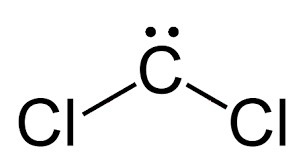
A compound composed of only carbon and chlorine is 85.5% chlorine by mass. propose a lewis structure for the lightest of the pos
lions [2927]

The visual representation is displayed in the following image.

For calculations, consider 100 grams of the compound:

ω(Cl) = 85.5% ÷ 100%.

ω(Cl) = 0.855; signifying the mass percentage of chlorine in the compound.

m(Cl) = 0.855 · 100 g.

m(Cl) = 85.5 g; this represents the mass of chlorine.

m(C) = 100 g - 85.5 g.

m(C) = 14.5 g; indicating the mass of carbon.

n(Cl) = m(Cl) ÷ M(Cl).

n(Cl) = 85.5 g ÷ 35.45 g/mol.

n(Cl) = 2.41 mol; this is the quantity of chlorine.

n(C) = 14.5 g ÷ 12 g/mol.

n(C) = 1.21 mol; this is the quantity of carbon.

n(Cl): n(C) = 2.41 mol: 1.21 mol = 2: 1.

The compound in question is identified as dichlorocarbene CCl₂.

4 0
2 months ago
Read 2 more answers
When 100 ml of 1.0 M Na3PO4 is mixed with 100 ml of 1.0 M AgNO3,a yellow precipitate forms and Ag+ becomes negligibly small. Whi
castortr0y [3046]
The correct answer is Option A. The calculation goes as follows: Number of millimoles of Na3PO4 = 1 × 100 = 100 Number of millimoles of AgNO3 = 1 × 100 = 100 Dissociating 1 mole of Na3PO4 yields 3 moles of sodium ions and 1 mole of phosphate ions, whereas 1 mole of AgNO3 releases 1 mole of Ag+ and 1 mole of NO3-. The Ag+ ion concentration becomes negligible since it forms a precipitate with the phosphate ion, indicating that the concentration of phosphate ions is also low. With 100 millimoles of Na3PO4, we get 300 millimoles of Na+ and 100 millimoles of PO43-, and with 100 millimoles of AgNO3 we have 100 millimoles of Ag+ and 100 millimoles of NO3-. Thus, the order of increasing concentration is: PO43- < NO3- < Na+.
4 0
2 months ago
Read 2 more answers
The powder-based packet to purify water failed for a number of reasons including Select one: a. Rust b. Expense c. Sales personn
Anarel [2989]
The answer is D. Contamination.
8 0
1 month ago
Other questions:
  • A solid mixture weighs 0.6813 g. It contains gallium bromide (GaBr3) and other inert impurities. When the solid mixture was diss
    9·2 answers
  • During a combustion reaction, 9.00 grams of oxygen reacted with 3.00 grams of CH4.
    5·1 answer
  • Determine the limiting reactant (LR) and the mass (in g) of nitrogen that can be formed from 50.0 g N2O4 and 45.0 g N2H4. Some p
    9·2 answers
  • Magnesium has an atomic mass of 24.3. there are two isotopes of magnesium - one contains 12 neutrons and the other contains 13 n
    7·1 answer
  • a sample of water with a mass of 648.00 kg at 298 K is heated with 87 kh of energy. the specific heat of water is 1 J-1 kg K-1.
    9·2 answers
  • A pure titanium cube has an edge length of 2.78 in. How many titanium atoms does it contain? Titanium has a density of 4.50g/cm3
    5·1 answer
  • The rate of disappearance of HBr in the gas phase reaction 2 HBr(g) → H2(g) + Br2(g) is 0.140 M s-1 at 150°C. The rate of appear
    11·1 answer
  • A ________ has wavy or wrinkled foliations. These rocks usually have a pseudo-metallic luster from the abundance of mica.
    10·1 answer
  • At 298 K and 1 atm, bromine is a liquid with a high vapor pressure, whereas chlorine is a gas. This provides evidence that, unde
    13·1 answer
  • The density of benzene at 15°C is 0.8787g/mL calculate the mass of 0.1300 of benzene at this temperature
    14·1 answer
Add answer
Login
Not registered? Fast signup
Signup
Login Signup
Ask question!