answer.
Ask question
Login Signup
Ask question
All categories
  • English
  • Mathematics
  • Social Studies
  • Business
  • History
  • Health
  • Geography
  • Biology
  • Physics
  • Chemistry
  • Computers and Technology
  • Arts
  • World Languages
  • Spanish
  • French
  • German
  • Advanced Placement (AP)
  • SAT
  • Medicine
  • Law
  • Engineering
Pachacha
23 days ago
3

The table describes a gas stored in four different containers. Properties of Stored Gas Container Properties 1 · Low number of c

ollisions with container walls · Medium average kinetic energy · Large number of particles 2 · Large number of collisions with container walls · Medium average kinetic energy · Small number of particles with little spaces between them 3 · Large number of collisions with container walls · High average kinetic energy · Large number of particles with large spaces between them 4 · Few collisions with container walls · Low average kinetic energy · Small number of particles Which container has gas stored at the highest temperature?
Chemistry
You might be interested in
During photosynthesis, sunlight shining on a plant is absorbed. Through several chemical reactions, the plant produces sugar, a
KiRa [2933]
The transformation involves converting thermal energy into chemical energy. Sugar is rich in chemical potential energy, which explains why it serves as an energy source for living organisms. Photosynthesis utilizes sunlight to transform carbon dioxide and water into sugar and oxygen, effectively changing the thermal energy from light into the chemical energy stored in sugar.

I hope this clarifies things. If you have any questions, feel free to ask.
4 0
2 months ago
Read 2 more answers
What percent, by mass, is Oxygen in the compound Fe(OH)3?
Anarel [2989]

Answer:

Oxygen's mass percent in Fe(OH)3 is 44.92%

Explanation: The mass percentage is a means of indicating the concentration of a specific element within a compound. It is determined through the ratio of the element's mass to the compound's total mass, multiplied by 100.

•First calculate the overall mass of the compound

•Fe's molar mass = 55.85 g/mol

•O's molar mass = 16 g/mol

•H's molar mass = 1 g/mol

Using these values, we can compute the molecular mass of Fe(OH)3 = 55.85 g/mol + (16 g/mol)3 + (1 g/mol)3

=55.85 g/mol + 48 g/mol + 3 g/mol

=106.85 g/mol

Mass percent of an element = mass of element/total mass of compound × 100

In the case of 3 oxygen atoms present within the compound, the mass of oxygen totals 48 g/mol

Mass percent of oxygen= 48 g/mol/106.85 g/mol × 100

= 0.4492×100= 44.92%

[[TAG_31]]Thus, the mass percent of oxygen in Fe(OH)3 amounts to 44.92%[[TAG_32]]
7 0
3 months ago
Help on part "c": The forensic technician at a crime scene has just prepared a luminol stock solution by adding 19.0g of luminol
lions [2927]

1. The luminol stock solution has a molarity of 1.431 M.

2. In 2.00 L of the diluted spray, there are 0.12 moles of luminol.

3. The volume of the stock solution from Part A that contains the same number of moles present in the diluted solution from Part B is 83.86 ml.

Additional Information

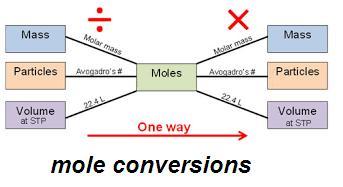
Stoichiometry in Chemistry focuses on the quantitative aspects of chemical reactions, which includes calculations related to volume, mass, and the count of ions, molecules, and elements.

Key concepts in stoichiometry include:

  • 1. Relative atomic mass
  • 2. Relative molecular mass

This refers to the relative atomic mass of a molecule.

  • 3. Mole

A mole represents the number of particles in a substance equivalent to the number of atoms in 12 grams of carbon-12.

1 mole = 6.02 × 10²³ particles.

The quantity of moles can also be derived by dividing mass (in grams) by either the relative mass of an element or the relative mass of a molecule.

\large{\boxed{\bold{mol\:=\:\frac{grams}{ relative\:mass} }}}

Luminol (C₈H₇N₃O₂) is utilized for detecting blood traces at crime scenes, due to its reaction with iron found in blood.

To prepare a luminol stock solution, 19.0 g of luminol is mixed into a total volume of 75.0 mL of water.

Thus, the molarity is calculated as:

  • 1. Moles of Luminol

- the relative molecular mass of Luminol:

= 8.C + 7.H + 3.N + 2.16

= 8.12 + 7.1 + 3.14 + 2.16

= 177 grams/mol.

Thus, we have:

moles = grams / relative molecular mass.

mole=\frac{19}{177}

moles = 0.1073.

2. Molarity (M)

M = moles / volume

M\:=\:{\frac{ 0.1703 }{75.10^{-3} L}

M = 1.431.

  • b. The concentration of luminol in the spray bottle is 6.00 × 10⁻² M. Therefore, in a 2 L solution, the number of moles is:

moles = M × volume

moles = 6 × 10⁻² × 2

moles = 0.12.

  • c. The molarity of the stock solution (Part A) is 1.431 M.

The diluted solution (Part B) contains 0.12 moles of luminol.

To find the volume of the stock solution (Part A) that has the same moles as the diluted solution (Part B):

volume = moles / M

volume\:=\:\frac{0.12}{1.431}

volume = 0.08386 L = 83.86 mL.

Further Learning

moles of water you can generate

the amount of each atom in the chemical's formula

the proportion of hydrogen to oxygen atoms in 2 L of water

Keywords: mole, volume, molarity, Luminol, relative molecular mass

6 0
4 months ago
Read 2 more answers
Other questions:
  • For c2h3o2−, write an equation that shows how the anion acts as a base.
    11·2 answers
  • Convert 338 L at 63.0 atm to its new volume at standard pressure.
    14·1 answer
  • How many molecules of ethane (C2H6) are present in 0.334 g of C2H6?
    10·1 answer
  • What volume of beaker contains exactly 2.23x10^-2 mol of nitrogen gas at STP?
    6·1 answer
  • 156 g sample of steel has a volume of 20.0 mL. What is the density of the steel sample? a g/cm3 Your answer should be rounded to
    10·2 answers
  • Find the empirical formula of each of the following compounds. Given mass or for each element in a sample of the compound 3,611
    14·1 answer
  • Classify each property as associated with a liquid that has strong or weak intermolecular forces Drag the appropriate items to t
    9·1 answer
  • Convert the following:<br><br> 3.9 x 10⁻¹⁶ mL to ML
    6·1 answer
  • The 1h nmr spectra corresponds to an alcohol with the molecular formula c5h12o. Deduce the structure from the spectra.
    5·1 answer
  • When 189.6 g of ethylene (C2H4) burns in oxygen to give carbon dioxide and water, how many grams of CO2 are formed?
    5·1 answer
Add answer
Login
Not registered? Fast signup
Signup
Login Signup
Ask question!