answer.
Ask question
Login Signup
Ask question
All categories
  • English
  • Mathematics
  • Social Studies
  • Business
  • History
  • Health
  • Geography
  • Biology
  • Physics
  • Chemistry
  • Computers and Technology
  • Arts
  • World Languages
  • Spanish
  • French
  • German
  • Advanced Placement (AP)
  • SAT
  • Medicine
  • Law
  • Engineering
scoray
7 days ago
5

Help on part "c": The forensic technician at a crime scene has just prepared a luminol stock solution by adding 19.0g of luminol

into a total volume of 75.0mL of H2O.
a)What is the molarity of the stock solution of luminol?
anwer I got: molarity of luminol solution = 1.43M b)Before investigating the scene, the technician must dilute the luminol solution to a concentration of 6.00×10⁻² M. The diluted solution is then placed in a spray bottle for application on the desired surfaces.
I cannot get the correct answer for "c"...I have tried: 172mL,11.9mL, and 1.19*10^4. The only other possibility that I can come up with is: 83.9mL. Would this one be correct?...Or...am I still completely out to lunch???
c)How many moles of luminol are present in 2.00 L of the diluted spray?
anwer I got: moles of luminol = 0.120mol What volume of the stock solution (Part A) would contain the number of moles present in the diluted solution (Part B)?
Express your answer in milliliters.

Chemistry
2 answers:
lions [985]7 days ago
6 0

1. The luminol stock solution has a molarity of 1.431 M.

2. In 2.00 L of the diluted spray, there are 0.12 moles of luminol.

3. The volume of the stock solution from Part A that contains the same number of moles present in the diluted solution from Part B is 83.86 ml.

Additional Information

Stoichiometry in Chemistry focuses on the quantitative aspects of chemical reactions, which includes calculations related to volume, mass, and the count of ions, molecules, and elements.

Key concepts in stoichiometry include:

  • 1. Relative atomic mass
  • 2. Relative molecular mass

This refers to the relative atomic mass of a molecule.

  • 3. Mole

A mole represents the number of particles in a substance equivalent to the number of atoms in 12 grams of carbon-12.

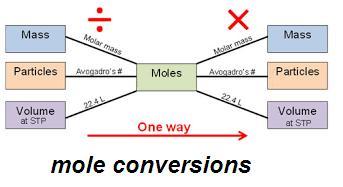
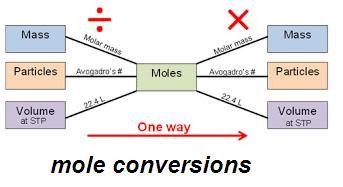
1 mole = 6.02 × 10²³ particles.

The quantity of moles can also be derived by dividing mass (in grams) by either the relative mass of an element or the relative mass of a molecule.

\large{\boxed{\bold{mol\:=\:\frac{grams}{ relative\:mass} }}}

Luminol (C₈H₇N₃O₂) is utilized for detecting blood traces at crime scenes, due to its reaction with iron found in blood.

To prepare a luminol stock solution, 19.0 g of luminol is mixed into a total volume of 75.0 mL of water.

Thus, the molarity is calculated as:

  • 1. Moles of Luminol

- the relative molecular mass of Luminol:

= 8.C + 7.H + 3.N + 2.16

= 8.12 + 7.1 + 3.14 + 2.16

= 177 grams/mol.

Thus, we have:

moles = grams / relative molecular mass.

mole=\frac{19}{177}

moles = 0.1073.

2. Molarity (M)

M = moles / volume

M\:=\:{\frac{ 0.1703 }{75.10^{-3} L}

M = 1.431.

  • b. The concentration of luminol in the spray bottle is 6.00 × 10⁻² M. Therefore, in a 2 L solution, the number of moles is:

moles = M × volume

moles = 6 × 10⁻² × 2

moles = 0.12.

  • c. The molarity of the stock solution (Part A) is 1.431 M.

The diluted solution (Part B) contains 0.12 moles of luminol.

To find the volume of the stock solution (Part A) that has the same moles as the diluted solution (Part B):

volume = moles / M

volume\:=\:\frac{0.12}{1.431}

volume = 0.08386 L = 83.86 mL.

Further Learning

moles of water you can generate

the amount of each atom in the chemical's formula

the proportion of hydrogen to oxygen atoms in 2 L of water

Keywords: mole, volume, molarity, Luminol, relative molecular mass
eduard [944]7 days ago
5 0

Response:

I didn't work on part a) since you mentioned that you only needed the answer for part c), therefore the result is:

n = 0.120 moles.

Volume = 83.9 mL.

Reasoning:

The dilution from a 1.43 M solution to a 0.06 M solution is in a ratio of 22.8 to 1. Thus, to the original solution, 22.8 parts of water should be added. The calculation of moles is done as:

n = M × V = 2 L × 0.06 M = 0.120 moles.

To find the volume, use this calculation:

V = n/M = 0.120 moles / 1.43 M = 83.9 mL.

You might be interested in
Calculate the number of grams of carbon dioxide produced from complete combustion of one liter of octane by placing the conversi
Tems11 [846]

Answer:

15.71g

Explanation:

The combustion equation that applies to hydrocarbons is

CxHy + (x+y/4) O2 = xCO2 + (y/2) H2O

In the case of octane, C8H18:

C8H18 + ( 8 + 18/4 ) O2 = 8CO2 + 9H2O

C8H18 + 50/4 O2 = 8CO2 + 9H2O

C8H18 + 25/2 O2 = 8CO2 + 9H2O

2C8H18 + 25 O2 = 16 CO2 + 18H2O (this is the balanced equation)

From this balanced reaction,

2 x 22.4 L of octane generates 16 [ 12 + (16 x 2)] of carbon dioxide

That means,

44.8 L of octane generates 704g of carbon dioxide

Thus, for 1L of octane, it produces 1 L x 704g/44.8 L = 15.71g of carbon dioxide

Consequently, 15.71g of carbon dioxide is produced from the complete combustion of 1 L of octane.

7 0
14 hours ago
How many milliliters of 0.200 M NH4OH are needed to react with 12.0 mL of 0.550 M FeCl3?
eduard [944]

Response:

9.9 ml of 0.200M NH₄OH(aq)

Reasoning:

3NH₄OH(Iaq) + FeCl₃(aq) => NH₄Cl(aq) + Fe(OH)₃(s)

What volume in ml of 0.200M NH₄OH(aq) will fully react with 12ml of 0.550M FeCl₃(aq)?

1 x Molarity of NH₄OH x Volume of NH₄OH Solution(L) = 2 x Molarity of FeCl₃ x Volume of FeCl₃ Solution

1(0.200M)(Volume of NH₄OH Soln) = 3(0.550M)(0.012L)

=> Volume of NH₄OH Soln = 3(0.550M)(0.012L)/1(0.200M) = 0.0099 Liters = 9.9 milliliters

5 0
8 days ago
What volume of gold would be equal in mass to a piece of copper with a volume of 141 ml? the density of gold is 19.3 g/ml; the d
alisha [964]

We need to calculate the volume of Gold, assuming its mass matches that of copper.

Given information:

Density of Copper = 8.96 g/ml.
Volume of Copper = 141 ml.
Mass of Gold = Mass of Copper.
Density of Gold = 19.3 g/ml.

To find copper's mass, we use the density equation:
Density = mass/volume.

To find mass of copper:
Mass of copper = Density of Copper * Volume of Copper.
Mass of copper = 8.96 g/ml * 141 ml = 1263.36 g.
Thus,
Mass of gold = Mass of copper = 1263.36 g.
Now, using the density formula for gold to get its volume:
Volume of gold = Mass of gold / Density of gold.
Volume of gold = 1263.36 g / 19.3 g/ml = 65.46 mL.

Consequently, the volume of gold required to match the mass of copper is 65.46 mL.

8 0
4 days ago
How can a piece of wood floating on water illustrate the condition of lowest potential energy and maximum
Tems11 [846]

Answer:

By reducing the height of the center of gravity of the object in relation to its center of buoyancy

Explanation:

In the field of hydrostatics, for a floating object, the state of equilibrium corresponds to either a peak or a trough in potential energy. Stability in equilibrium occurs when the potential energy is minimized. Achieving a lower position of the center of gravity of the floating object compared to its center of buoyancy creates a stable equilibrium arrangement.

4 0
11 days ago
1. Adakah benar bahawa anda tidak boleh membasuh rambut, meminum air sejuk dan
KiRa [971]

Answer:

Is it true that you shouldn't wash your hair, drink cold water, eat ice cream, or exercise during your period? Please explain your answer.

No, this is not accurate; doing any of these activities is perfectly fine. None of them affects us because they are not connected to our bodily systems. Also, I apologize for any language errors as I utilized Google Translate.

I hope this is helpful :)

7 0
17 days ago
Other questions:
  • The standard curve was made by spectrophotographic analysis of equilibrated iron(III) thiocyanate solutions of known concentrati
    15·1 answer
  • Which statement is correct? Salts are formed by the reaction of bases with water. Most salts are ionic and are soluble in water.
    11·2 answers
  • Which procedure cannot be performed on a hot plate, requiring a Bunsen burner instead
    6·1 answer
  • In the mass spectrum of the molecule phenol, C6H5OH, the approximate intensity of the peak at m/z 95, relative to the molecular
    9·1 answer
  • A tritium nucleus is formed by combining two neutrons and a proton. the mass of this nucleus is 9.106 × 10⁻³ universal mass unit
    13·2 answers
  • 66.667 mL of 3.000 M H2SO4 (aq) solution was neutralized by the stoichiometric amount of 4.000 M Al(OH)3 solution in a coffee cu
    12·1 answer
  • A chemical engineer must report the average volume of a certain pollutant produced by the plants under her supervision. Here are
    10·1 answer
  • 6.An acid-base indicator is usually a weak acid with a characteristic color in the protonated and deprotonated forms. Because br
    14·1 answer
  • Describe the cause of attraction between molecules of water
    5·1 answer
  • If 4.35 g of phosphoric acid are added to 5.25g of KOH, what is the percent yield of the reaction if only 3.15g of potassium pho
    10·1 answer
Add answer
Login
Not registered? Fast signup
Signup
Login Signup
Ask question!