answer.
Ask question
Login Signup
Ask question
All categories
  • English
  • Mathematics
  • Social Studies
  • Business
  • History
  • Health
  • Geography
  • Biology
  • Physics
  • Chemistry
  • Computers and Technology
  • Arts
  • World Languages
  • Spanish
  • French
  • German
  • Advanced Placement (AP)
  • SAT
  • Medicine
  • Law
  • Engineering
boyakko
1 month ago
9

The student collects the H2(g) produced by the reaction and measures its volume over water at 298 K after carefully equalizing t

he water levels inside and outside the gas-collection tube, as shown in the diagram below. The volume is measured to be 45.6mL . The atmospheric pressure in the lab is measured as 765 torr , and the equilibrium vapor pressure of water at 298 K is 24 torr .(i) The pressure inside the tube due to the H2(g)
Chemistry
1 answer:
KiRa [2.7K]1 month ago
4 0

Answer:

The pressure of H₂(g) is 741 torr

Explanation:

We know:

The atmospheric pressure in the lab is measured at 765 torr

The vapor pressure of water is 24 torr

Using Dalton's Law of Partial Pressure:

P_{total} = P_{H_2}+P_{H_2O}

To isolate the pressure in the tube from H₂(g):

we have:

P_{H_2} = P_{total} - P_{H_2O}

= (765 - 24) torr

= 741 torr

Hence, the pressure of H₂(g) is 741 torr

You might be interested in
A sample of solid naphthalene is introduced into an evacuated flask. Use the data below to calculate the equilibrium vapor press
Tems11 [2416]

Answer: The vapor pressure of naphthalene within the flask remains at 2.906\times 10^{-4} atm.

Explanation:

The transformation from solid naphthalene to its gaseous form follows the equilibrium reaction:

C_{10}H_8(s)\rightleftharpoons C_{10}H_8(g)

  • The formula employed to determine the enthalpy change for the reaction is:  

\Delta H^o_{rxn}=\sum [n\times \Delta H^o_f(product)]-\sum [n\times \Delta H^o_f(reactant)]

The formula for calculating the enthalpy change regarding the aforementioned reaction is:

\Delta H^o_{rxn}=(1\times \Delta H^o_f_{(C_{10}H_8(g))})-(1\times \Delta H^o_f_{(C_{10}H_8(s))})

The provided information includes:

\Delta H^o_f_{(C_{10}H_8(s))}=78.5kJ/mol\\\Delta H^o_f_{(C_{10}H_8(g))}=150.6kJ/mol

Substituting the values into the previous equation produces:

\Delta H^o_{rxn}=(1\times 150.6)-(1\times 78.5)=72.1kJ/mol

  • The formula utilized to compute Gibbs free energy change is of a reaction:

\Delta G^o_{rxn}=\sum [n\times \Delta G^o_f(product)]-\sum [n\times \Delta G^o_f(reactant)]

The equation for the enthalpy change for the reaction is:

\Delta G^o_{rxn}=(1\times \Delta G^o_f_{(C_{10}H_8(g))})-(1\times \Delta G^o_f_{(C_{10}H_8(s))})

The given factors include:

\Delta G^o_f_{(C_{10}H_8(s))}=201.6kJ/mol\\\Delta G^o_f_{(C_{10}H_8(g))}=224.1kJ/mol

By inserting values from the above equation, we arrive at:

\Delta G^o_{rxn}=(1\times 224.1)-(1\times 201.6)=22.5kJ/mol

  • For the calculation of K_1 (at 25°C) regarding the provided value of Gibbs free energy, the following relationship is applied:

\Delta G^o=-RT\ln K_1

where,

\Delta G^o = Gibbs free energy = 22.5 kJ/mol = 22500 J/mol  (Conversion factor: 1kJ = 1000J)

R = Gas constant = 8.314J/K mol

T = temperature = 25^oC=[273+25]K=298K

K_1 = equilibrium constant at 25°C =?

Inserting values into the above equation yields:

22500J/mol=-(8.314J/Kmol)\times 298K\times \ln K_1\\\\K_1=1.14\times 10^{-4}

  • To determine the equilibrium constant at 35°C, we refer to the equation proposed by Arrhenius, which states:

\ln(\frac{K_2}{K_1})=\frac{\Delta H}{T}(\frac{1}{T_1}-\frac{1}{T_2})

where,

K_2 = Equilibrium constant at 35°C =?

K_1 = Equilibrium constant at 25°C = 1.14\times 10^{-4}

\Delta H = Enthalpy change of the reaction = 72.1 kJ/mol = 72100 J

R = Gas constant = 8.314J/K mol

T_1 = Initial temperature = 25^oC=[273+25]K=298K

T_2 = Final temperature = 35^oC=[273+35]K=308K

By plugging values into the equation above, we obtain:

\ln(\frac{K_2}{1.14\times 10^{-4}})=\frac{72100J/mol}{8.314J/K.mol}(\frac{1}{298}-\frac{1}{308})\\\\K_2=2.906\times 10^{-4}

  • In order to calculate the partial pressure of naphthalene at 35°C, we utilize the equation for K_p, which is:

K_p=\frac{p_{C_{10}H_8(g)}}{p_{C_{10}H_8(g)}}=p_{C_{10}H_8(g)

The partial pressure of the solid phase is considered to be 1 at equilibrium.

Therefore, the value for K_2 will equal K_p

p_{C_{10}H_8}=2.906\times 10^{-4}

Consequently, the partial pressure of naphthalene at 35°C is 2.906\times 10^{-4} atm.

3 0
8 days ago
What volume of 0.550 M KBr solution can you make from 100.0 mL of 2.50 M KBr?
castortr0y [2750]
M1V1 = M2V2
(2.50)(100.0) = (0.550)V2
V2 = 455mL

From 100.0 mL of 2.50 M KBr, you can prepare 455 mL of 0.550 M solution.
5 0
1 month ago
Read 2 more answers
All faculty members are happy to see students help each other. Dumbledore is particularly pleased with Hermione. Though, it shou
VMariaS [2707]

Answer:

m_{Mg}=30.8mgMg

Explanation:

Greetings,

According to the provided chemical equation, the production of 31.2 mL of hydrogen allows one to calculate its moles using the ideal gas equation as detailed below:

n_{H_2}=\frac{PV}{RT}=\frac{754torr*\frac{1atm}{760torr}*0.0312L}{0.082 \frac{atm*L}{mol*K}*298.15K}=1.27x10^{-3}molH_2

Since the ratio of hydrogen to magnesium is 1:1, its milligrams are derived through the following proportional factor calculation:

m_{Mg}=1.27x10^{-3}molH_2*\frac{1molMg}{1molH_2}*\frac{24.305gMg}{1molMg}*\frac{1000mgMg}{1gMg}\\m_{Mg}=30.8mgMg

Regards.

3 0
26 days ago
What types of compounds are CaCl2, Cu, C2H6, respectively.
KiRa [2731]

Response:

Ionic, metal, organic

Clarification:

For this scenario, we should examine each compound:

-) CaCl_2

In this compound, there is a non-metal atom (Cl) paired with a metal atom (Ca). This leads to a significant difference in electronegativity, indicating that an ionic bond will form. Ions can be generated:

CaCl_2~->~Ca^+^2~+~2Cl^-

The positive ion would be Ca^+^2 while the negative ion is Cl^-. Thus, we have an ionic compound.

-) Cu

Here, we are looking at a single atom. Consulting the periodic table shows that this atom belongs to the transition metals section (central part of the periodic table). Hence, Cu (Copper) is identified as a metal.

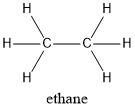
-) C_2H_6

Within this molecule, carbon and hydrogen are linked by single bonds. The difference in electronegativity between C and H is insufficient to lead to ion formation. Therefore, we have covalent bonds. This property is typical of organic compounds. (Refer to figure 1)

5 0
16 days ago
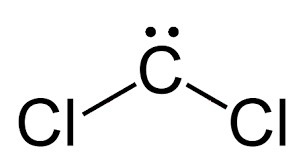
A compound composed of only carbon and chlorine is 85.5% chlorine by mass. propose a lewis structure for the lightest of the pos
lions [2669]

The visual representation is displayed in the following image.

For calculations, consider 100 grams of the compound:

ω(Cl) = 85.5% ÷ 100%.

ω(Cl) = 0.855; signifying the mass percentage of chlorine in the compound.

m(Cl) = 0.855 · 100 g.

m(Cl) = 85.5 g; this represents the mass of chlorine.

m(C) = 100 g - 85.5 g.

m(C) = 14.5 g; indicating the mass of carbon.

n(Cl) = m(Cl) ÷ M(Cl).

n(Cl) = 85.5 g ÷ 35.45 g/mol.

n(Cl) = 2.41 mol; this is the quantity of chlorine.

n(C) = 14.5 g ÷ 12 g/mol.

n(C) = 1.21 mol; this is the quantity of carbon.

n(Cl): n(C) = 2.41 mol: 1.21 mol = 2: 1.

The compound in question is identified as dichlorocarbene CCl₂.

4 0
1 month ago
Read 2 more answers
Other questions:
  • A 2.40 kg block of ice is heated with 5820 J of heat. The specific heat of water is 4.18 J•g^-1•C^-1. By how much will it’s temp
    15·1 answer
  • A certain alcoholic beverage contains only ethanol (C2H6O) and water. When a sample of this beverage undergoes combustion, the e
    12·1 answer
  • An insulin drip is mixed as 500.0 units in 250.0 mL Normal Saline (NS). Calculate the drip rate in mL/h needed to deliver 4.0 un
    10·1 answer
  • When 200 grams of water cools from 50.°C to 25°C, the total amount of heat energy released by the water is?
    7·1 answer
  • Three glass bulbs, joined by closed stopcocks, have the following volumes and initial pressures of the specified gases.
    13·1 answer
  • You are eating a pizza. What type of mixture are you consuming?
    10·2 answers
  • A gas of potassium chlorate molecules KClO3 all decompose into potassium chloride, KCl, and diatomic oxygen, O2. The products an
    9·1 answer
  • Sodium metal reacts with chlorine gas in a combination reaction. Write a balanced equation to describe this reaction. Click in t
    5·1 answer
  • One type of breathalyzer employs a fuel cell to measure the quantity of alcohol in the breath. When a suspect blows into the bre
    12·1 answer
  • When a stable diatomic molecule spontaneously forms from its atoms, what are the signs of Delta H, Delta S, and Delta G? A. + +
    14·1 answer
Add answer
Login
Not registered? Fast signup
Signup
Login Signup
Ask question!