answer.
Ask question
Login Signup
Ask question
All categories
  • English
  • Mathematics
  • Social Studies
  • Business
  • History
  • Health
  • Geography
  • Biology
  • Physics
  • Chemistry
  • Computers and Technology
  • Arts
  • World Languages
  • Spanish
  • French
  • German
  • Advanced Placement (AP)
  • SAT
  • Medicine
  • Law
  • Engineering
spayn
1 month ago
7

With what compound will nh3 experience only dispersion intermolecular forces? with what compound will nh3 experience only disper

sion intermolecular forces? hcn ch3oh bf3 lif ch3f
Chemistry
2 answers:
eduard [2.6K]1 month ago
8 0

Answer: NH3 will only engage in dispersion forces when combined with BF3.

Explanation:

Molecules exhibit various types of intermolecular forces (IMF).

1) Hydrogen Bonds: These occur when a hydrogen atom is bonded to N, F, or O atoms.

Among the provided molecules, only CH3OH is capable of forming hydrogen bonds.

2) Dipole-dipole interactions: These interactions take place in polar molecules. Among the mentioned compounds, CH3F and HCN exhibit this property as they are polar.

3) Electrostatic forces of attraction: This type of force is found in ionic compounds where oppositely charged ions interact. For instance, LiF is an example of such a compound.

4) Dispersion forces: London dispersion forces dominate in nonpolar substances.

In the case of BF3, its trigonal planar structure neutralizes the dipoles from the individual B-F bonds, resulting in a nonpolar molecule overall.

Therefore, NH3 will only engage in dispersion forces with BF3.

Anarel [2.7K]1 month ago
6 0

Ammonia will encounter only dispersion intermolecular forces when interacting with BF₃ (boron trifluoride) because BF₃ is exclusively a nonpolar molecule (the dipole moment vectors cancel each other out, resulting in a net dipole moment of zero).
The London dispersion force (an intermolecular force) <span>is a short-lived attractive</span> force present between the molecules.

You might be interested in
If 1.50 μg of CO and 6.80 μg of H2 were added to a reaction vessel, and the reaction went to completion, how many gas particles
Alekssandra [2891]
The reaction can be described as follows: CO + 2H2 = CH3OH. Given the specified quantities of the reactants, we will identify the limiting reactant and compute the remaining excess amount. Calculating, 1.50 x 10^-6 g CO converts to 5.36 x 10^-8 mol CO, while 6.80 x 10^-6 g H2 equals 3.37 x 10^-6 mol H2. Thus, CO is fully consumed in the reaction, leaving 3.37 x 10^-6 - 5.36 x 10^-8 = 3.32 x 10^-6 moles of gas.
5 0
1 month ago
The ionic radius of a sodium ion is 2.27 angstroms (A) . What is this length in um
lions [2782]

\boxed{\sf 1Å=10^{-10}m}

\\ \rm\longmapsto 2.27Å

\\ \rm\longmapsto 2.27\times 10^{-10}m

\\ \rm\longmapsto 0.227\times 10^{-9}m

\\ \rm\longmapsto 0.0227\times 10^{-8}m

\\ \rm\longmapsto 0.00227\times 10^{-7}m

\\ \rm\longmapsto 0.00023\times 10^{-6}m

\\ \rm\longmapsto 0.00023\mu m

6 0
1 month ago
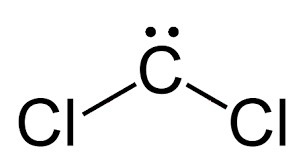
A compound composed of only carbon and chlorine is 85.5% chlorine by mass. propose a lewis structure for the lightest of the pos
lions [2782]

The visual representation is displayed in the following image.

For calculations, consider 100 grams of the compound:

ω(Cl) = 85.5% ÷ 100%.

ω(Cl) = 0.855; signifying the mass percentage of chlorine in the compound.

m(Cl) = 0.855 · 100 g.

m(Cl) = 85.5 g; this represents the mass of chlorine.

m(C) = 100 g - 85.5 g.

m(C) = 14.5 g; indicating the mass of carbon.

n(Cl) = m(Cl) ÷ M(Cl).

n(Cl) = 85.5 g ÷ 35.45 g/mol.

n(Cl) = 2.41 mol; this is the quantity of chlorine.

n(C) = 14.5 g ÷ 12 g/mol.

n(C) = 1.21 mol; this is the quantity of carbon.

n(Cl): n(C) = 2.41 mol: 1.21 mol = 2: 1.

The compound in question is identified as dichlorocarbene CCl₂.

4 0
1 month ago
Read 2 more answers
A gas sample of argon, maintained at constant temperature, occupies a volume of 500. l at 4.00 atm. what is the new volume if th
lorasvet [2668]
Boyle's law describes the relationship between gas pressure and volume. 
It asserts that at a constant temperature, pressure is inversely proportional to gas volume.
PV = k
where P represents pressure, V denotes volume, and k is a constant. 
P1V1 = P2V2
where the parameters for the initial condition are on the left, and the parameters for the second condition appear on the right side of the formula.
By substituting values into the equation: 4.00 atm x 500 L = 8.0 atm x V
V calculates to 250 L.
Thus, the new volume becomes 250 L.
6 0
1 month ago
Read 2 more answers
You want to prepare a solution with a concentration of 200.0μM from a stock solution with a concentration of 500.0mM. At your di
lorasvet [2668]

Answer:

1) This dilution plan will yield a 200μM solution.

2) This dilution plan will not yield a 200μM solution.

3) This dilution plan will not yield a 200μM solution.

4) This dilution plan will yield a 200μM solution.

5) This dilution plan will yield a 200μM solution.

Explanation:

Convert the initial molarity into molar form as shown.

500mM = 500mM \times (\frac{1M}{1000M})= 0.5M

Let's examine the following serial dilution processes.

1)

Dilute 5.00 mL of the stock solution to 500 mL. Then take 10.00 mL of this new solution and dilute it further to 250 mL.

Concentration of 500 mL solution:

M_{2}= \frac{M_{1}V_{1}}{V_{2}}= \frac{(0.5M)(5.00mL)}{500 mL}= 5 \times 10^{-3}M

10 mL of this solution is further diluted to 250 mL

M_{final}= \frac{M_{2}V_{2}}{V_{final}}= \frac{(5 \times 10^{-3}M)(10.0mL)}{250 mL}= 2 \times 10^{-4}M

Convert μM:

2 \times 10^{-4}M = (2 \times 10^{-4}M)(\frac{1 \mu M}{10^{-6}M})= 200 \mu M

Thus, this dilution scheme will yield a 200μM solution.

2)

Dilute 5.00 mL of the stock solution to 100 mL. Then take 10.00 mL of this new solution and dilute to 1000 mL.

Concentration of 100 mL solution:

M_{2}= \frac{M_{1}V_{1}}{V_{2}}= \frac{(0.5M)(5.00mL)}{100 mL}= 2.5 \times 10^{-2}M

10 mL of this solution is further diluted to 1000 mL

M_{final}= \frac{M_{2}V_{2}}{V_{final}}= \frac{(2.5 \times 10^{-2}M)(10.0mL)}{1000 mL}= 2.5 \times 10^{-4}M

Convert μM:

2.5 \times 10^{-4}M = (2.5 \times 10^{-4}M)(\frac{1 \mu M}{10^{-6}M})= 250 \mu M

Thus, this dilution scheme will not yield a 200μM solution.

3)

Dilute 10.00 mL of the stock solution to 100 mL, followed by diluting 5 mL of that new solution to 100 mL.

Concentration of 100 mL solution:

M_{2}= \frac{M_{1}V_{1}}{V_{2}}= \frac{(0.5M)(10mL)}{100 mL}= 0.05M

5 mL of this solution is diluted to 1000 mL

M_{final}= \frac{M_{2}V_{2}}{V_{final}}= \frac{(0.05M)(5mL)}{1000 mL}= 0.25 \times 10^{-4}M

Convert μM:

0.25 \times 10^{-4}M = (0.25 \times 10^{-4}M)(\frac{1 \mu M}{10^{-6}M})= 25 \mu M

Thus, this dilution scheme will not yield a 200μM solution.

4)

Dilute 5 mL of the stock solution to 250 mL. Then take 10 mL of this new solution and further dilute it to 500 mL.

Concentration of 250 mL solution:

M_{2}= \frac{M_{1}V_{1}}{V_{2}}= \frac{(0.5M)(5mL)}{250 mL}= 0.01M

10 mL of this solution is further diluted to 500 mL

M_{final}= \frac{M_{2}V_{2}}{V_{final}}= \frac{(0.01M)(10mL)}{500 mL}= 2 \times 10^{-4}M

Convert μM:

2 \times 10^{-4}M = (2 \times 10^{-4}M)(\frac{1 \mu M}{10^{-6}M})= 200 \mu M

Thus, this dilution scheme will yield a 200μM solution.

5)

Dilute 10 mL of the stock solution to 250 mL. Then take another 10 mL of this new solution and dilute it to 1000 mL.

Concentration of 250 mL solution:

M_{2}= \frac{M_{1}V_{1}}{V_{2}}= \frac{(0.5M)(10mL)}{250 mL}= 0.02M

10 mL of this solution is further diluted to 1000 mL

M_{final}= \frac{M_{2}V_{2}}{V_{final}}= \frac{(0.02M)(10mL)}{1000 mL}= 2 \times 10^{-4}M

Convert μM:

2 \times 10^{-4}M = (2 \times 10^{-4}M)(\frac{1 \mu M}{10^{-6}M})= 200 \mu M

Thus, this dilution scheme will yield a 200μM solution.

7 0
1 month ago
Other questions:
  • What do you think life on earth would be like if chemistry had not been put to practical use?​
    5·1 answer
  • Diatomic hydrogen gas and diatomic nitrogen gas react spontaneously to form a gaseous product. Give the balanced chemical equati
    8·2 answers
  • The discharge of chromate ions (CrO42-) to sewers or natural waters is of concern because of both its ecological impacts and its
    5·1 answer
  • Acrylonitrile () is the starting material for many synthetic carpets and fabrics. It is produced by the following reaction. If 1
    9·1 answer
  • How many significant figures in 8400
    5·2 answers
  • An open box of bandages is on the floor bandage wrappers are found nearby <br> chemical treatment
    9·2 answers
  • If kc = 7.04 × 10⁻² for the reaction: 2 hbr(g) ⇌h2(g) + br2(g), what is the value of kc for the reaction: 1/2 h2(g) + 1/2 br2 ⇌h
    14·1 answer
  • Check all the boxes that describe the electron sea model. It is the simplest metal bonding model. It is the most complicated met
    8·2 answers
  • If three potatoes have a mass of 667 g, what will be the mass of 100 potatoes? A. 200 kg B. 22.2 kg C. 2223 g D. 20.0 kg
    11·1 answer
  • In the first order decomposition of acetone at 500°c, ch3och3→ productit is found that the concentration of acetone is 0.0300 m
    10·1 answer
Add answer
Login
Not registered? Fast signup
Signup
Login Signup
Ask question!