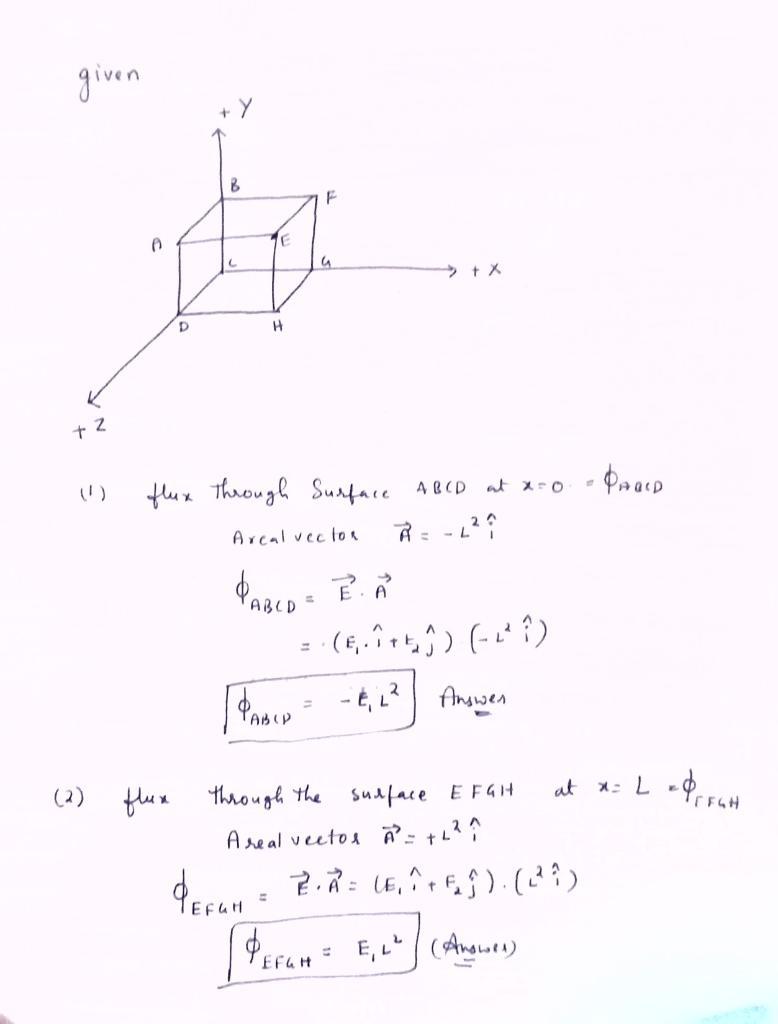
answer.
Ask question
Login Signup
Ask question
All categories
  • English
  • Mathematics
  • Social Studies
  • Business
  • History
  • Health
  • Geography
  • Biology
  • Physics
  • Chemistry
  • Computers and Technology
  • Arts
  • World Languages
  • Spanish
  • French
  • German
  • Advanced Placement (AP)
  • SAT
  • Medicine
  • Law
  • Engineering
Mademuasel
17 days ago
10

Taylor places a nail on a bar magnet. The nail sticks to the magnet when lifted up off the table. She touches a paperclip to the

nail and it sticks to the nail. Explain what happened to the magnetic domains of the nail before and after touching it to the bar magnet.
Physics
2 answers:
inna [2.2K]17 days ago
8 0

Initially, the magnetic domains within the nail are oriented in various directions, leading to an overall lack of magnetism. When the nail comes into contact with the bar magnet, these domains begin aligning in the same direction as the magnet's field. After this interaction, the nail itself becomes magnetized, which is evident when a paperclip is subsequently attracted to it and adheres to its surface.

ValentinkaMS [2.4K]17 days ago
5 0
Initially, the magnetic domains within the nail were oriented in various directions before coming into contact with the bar magnet. Upon Taylor touching the nail to the bar magnet, the magnetic fields of those domains became aligned, thus transforming the nail into a temporary magnet.
You might be interested in
A uniform electric field of 2 kNC-1 is in the x-direction. A point charge of 3 μC initially at rest at the origin is released. W
ValentinkaMS [2425]
The force due to electricity on the charge is calculated by multiplying the charge by the intensity of the electric field:
F=qE
in our scenario, where q=3 \mu C= 3 \cdot 10^{-6} C and E=2 kN/C=2000 N/C, resulting in the force of
F=(3 \cdot 10^{-6} C)(2000 N/C)=0.006 N

Initially, the kinetic energy of the particle is at zero (as it remains stationary), which means its final kinetic energy is equal to the work performed by the electric force over a distance of x=4 m:
K(4 m)=W=Fd=(0.006 N)(4 m)=0.024 J
8 0
5 days ago
Consider the uniform electric field E = (2.5 j + 3.5 k) × 103 N/C. (a) Calculate the electric flux through a circular area of ra
kicyunya [2264]
The desired electric flux Φ is calculated from the electric field E=(2.5• j + 3.5• k) ×10³ N/C and a circular path with a radius r=2.5m. The electric flux across a surface is represented as Φ=∮E•dA. Given the area A lies in the yz-plane, the normal orientation flows in the x-direction with A=πr² leading to dA=2πrdr •i. Thus, Φ evolves to Φ=∮(2.5j + 3.5k)×10³•(2πrdr i). Integrating from r=0 to r=2.5m and noting that components in different directions yield zero, results in Φ equaling 0 Nm²/C. Regarding the second part, when the area vector is at a 45° angle to the xy-plane, we redefine dA as (2πrCos45 i + 2πrSin45 j) dr, leading to the new flux calculation as Φ=10³∮ 5πrSin45 dr, integrating from 0 to 2.5m. With substitutions made, the result comes to Φ=34.71×10³ Nm²/C.
3 0
11 days ago
An ideally efficient heat pump delivers 1000 J of heat to room air at 300 K. If it extracted heat from 260 K outdoor air, how mu
Yuliya22 [2438]

Answer:

Wnet, in, = 133.33J

Explanation:

Provided that

Pump heat QH = 1000J

Hot temperature TH= 300K

Cold temperature TL= 260K

Given the heat pump is entirely reversible, the performance coefficient expression is formulated as follows:

According to the first law of thermodynamics,

COP(HP, rev) = 1/(1-TL/TH)

COP(HP, rev) = 1/(1-260/300)

COP(HP, rev) = 1/(1-0.867)

COP(HP, rev) = 1/0.133

COP(HP, rev) = 7.5

The power necessary to operate the heat pump is given by

Wnet, in = QH/COP(HP, rev)

Wnet, in = 1000/7.5

Wnet, in = 133.333J. QED

Thus, the 133.33J represents the initial work input during the heat transfer process.

<padditionally...><pbased on="" the="" first="" law="" rate="" at="" which="" heat="" is="" extracted="" from="" lower="" temperature="" reservoir="" calculated="" as="">

QL=QH-Wnet, in

QL=1000-133.333

QL=866.67J

</pbased></padditionally...>
5 0
21 day ago
An infinite sheet of charge, oriented perpendicular to the x-axis, passes through x = 0. It has a surface charge density σ1 = -2
Maru [2360]

1) For x = 6.6 cm, E_x=3.47\cdot 10^6 N/C

2) For x = 6.6 cm, E_y=0

3) For x = 1.45 cm, E_x=-3.76\cdot 10^6N/C

4) For x = 1.45 cm, E_y=0

5) Surface charge density at b = 4 cm: +62.75 \mu C/m^2

6) At x = 3.34 cm, the x-component of the electric field equals zero

7) Surface charge density at a = 2.9 cm: +65.25 \mu C/m^2

8) None of these regions

Explanation:

1)

The electric field from an infinite charge sheet is perpendicular to it:

E=\frac{\sigma}{2\epsilon_0}

where

\sigma is the surface charge density

\epsilon_0=8.85\cdot 10^{-12}F/m represents vacuum permittivity

Outside the slab, the electric field behaves like that of an infinite sheet.

Consequently, the electric field at x = 6.6 cm (situated to the right of both the slab and sheet) results from the combination of the fields from both:

E=E_1+E_2=\frac{\sigma_1}{2\epsilon_0}+\frac{\sigma_2}{2\epsilon_0}

where

\sigma_1=-2.5\mu C/m^2 = -2.5\cdot 10^{-6}C/m^2\\\sigma_2=64 \muC/m^2 = 64\cdot 10^{-6}C/m^2

The field from the sheet points left (negative, inward), and the slab’s field points right (positive, outward).

Thus,

E=\frac{1}{2\epsilon_0}(\sigma_1+\sigma_2)=\frac{1}{2(8.85\cdot 10^{-12})}(-2.5\cdot 10^{-6}+64\cdot 10^{-6})=3.47\cdot 10^6 N/C

and the negative sign indicates a rightward direction.

2)

Both the sheet’s and slab’s fields are perpendicular to their surfaces, directing along the x-axis, hence there's no y-component for the total field.

<pThus, the y-component totals zero.

This happens because both the sheet and slab stretch infinitely along the y-axis. Choosing any x-axis point reveals that the y-component of the field, generated by a surface element dS of either the sheet or slab, dE_y, will be equal and opposite to the corresponding component from the opposite side, -dE_y. Thus, the combined y-direction field is always zero.

3)

This scenario resembles part 1), but the point here is

x = 1.45 cm

which lies between the sheet and the slab. The fields from both contribute leftward as the slab has a negative charge (resulting in an outward field). Thus, the total field computes to

E=E_1-E_2

Replacing with expressions from part 1), we get

E=\frac{1}{2\epsilon_0}(\sigma_1-\sigma_2)=\frac{1}{2(8.85\cdot 10^{-12})}(-2.5\cdot 10^{-6}-64\cdot 10^{-6})=-3.76\cdot 10^6N/C

where the negative illustrates a leftward direction.

4)

This portion parallels part 2). Since both fields remain perpendicular to the slab and sheet, no component exists along the y-axis, thus the electric field's y-component is zero.

5)

Notably, the slab behaves as a conductor, signifying charge mobility within it.

The net charge on the slab is positive, indicating a surplus of positive charge. With the negatively charged sheet on the left of the slab, positive charges shift towards the left slab edge (at a = 2.9 cm), while negative charges move to the right edge (at b = 4 cm).

The surface charge density per unit area of the slab is

\sigma=+64\mu C/m^2

This average denotes the surface charge density on both slab sides at points a and b:

\sigma=\frac{\sigma_a+\sigma_b}{2} (1)

Additionally, the infinite sheet at x = 0 negatively charged \sigma_1=-2.5\mu C/m^2, induces an opposite net charge on the slab's left surface, thus

\sigma_a-\sigma_b = +2.5 \mu C/m^2 (2)

Having equations (1) and (2) allows for solving the surface charge densities at a and b, yielding:

\sigma_a = +65.25 \mu C/m^2\\\sigma_b = +62.75 \mu C/m^2

6)

We aim to compute the x-component of the electric field at

x = 3.34 cm

This point lies inside the slab, bounded at

a = 2.9 cm

b = 4.0 cm

In a conducting slab, the electric field remains at zero owing to charge equilibrium; thus, the x-component thereof in the slab is zero

7)

From part 5), we determined the surface charge density at x = a = 2.9 cm is \sigma_a = +65.25 \mu C/m^2

8)

As mentioned in part 6), conductors have zero electric fields internally. Since the slab is conductive, the electric field inside remains zero; therefore, the regions where the electric field is null are

2.9 cm < x < 4 cm

Thus, the suitable answer is

"none of these regions"

Learn more about electric fields:

8 0
26 days ago
Point charge A with a charge of +4.00 μC is located at the origin. Point charge B with a charge of +7.00 μC is located on the x
ValentinkaMS [2425]

Response:

210.3 degrees

Justification:

The total force acting on charge A is 59.5 N

Apply the x and y components of the net force to determine the direction

atan (y/x)
8 0
1 day ago
Read 2 more answers
Other questions:
  • A ten-loop coil having an area of 0.23 m2 and a very large resistance is in a 0.047-T uniform magnetic field oriented so that th
    6·1 answer
  • Sitting in a second-story apartment, a physicist notices a ball moving straight upward just outside her window. The ball is visi
    7·1 answer
  • You, Archimedes, suspect that the king’s crown is not solid gold but is instead gold-plated lead. To test your theory, you weigh
    9·1 answer
  • A straight wire 20 cm long, carrying a current of 4 A, is in a uniform magnetic field of 0.6 T. What is the force on the wire wh
    15·2 answers
  • When a submarine dives to a depth of 5.0 × 10² m, how much pressure, in pa, must its hull be able to withstand? how many times l
    12·2 answers
  • What is another metaphor (aside from the fact that a piano can only produce certain notes) that could help someone understand en
    7·1 answer
  • One day you are driving your friends around town and you drive quickly around a corner without slowing down. You are going at a
    13·2 answers
  • Think about it: suppose a meteorite collided head-on with mars and becomes buried under mars's surface. what would be the elasti
    6·1 answer
  • Write a conclusion to this lab in which you discuss when a person on a roller coaster ride would have sensations of weightlessne
    9·1 answer
  • A turtle takes 3.5 minutes to walk 18 m toward the south along a deserted highway. A truck driver stops and picks up the turtle.
    11·1 answer
Add answer
Login
Not registered? Fast signup
Signup
Login Signup
Ask question!