answer.
Ask question
Login Signup
Ask question
All categories
  • English
  • Mathematics
  • Social Studies
  • Business
  • History
  • Health
  • Geography
  • Biology
  • Physics
  • Chemistry
  • Computers and Technology
  • Arts
  • World Languages
  • Spanish
  • French
  • German
  • Advanced Placement (AP)
  • SAT
  • Medicine
  • Law
  • Engineering
DerKrebs
15 days ago
15

You would like to know whether silicon will float in mercury and you know that can determine this based on their densities. Unfo

rtunately, you have the density of mercury in units of kilogram-meter^3 and the density of silicon in other units: 2.33 gram-centimeter^3. You decide to convert the density of silicon into units of kilogram-meter^3 to perform the comparison.
By which combination of conversion factors will you multiply 2.33 gram-centimeter^3 to perform the unit conversion?
Physics
1 answer:
Sav [2.2K]15 days ago
3 0

Answer:

Explanation:

To convert from gram / centimeter³ to kg / m³

gram / centimeter³

= 10⁻³ kg / centimeter³

= 10⁻³  / (10⁻²)³ kg / m³

= 10⁻³ / 10⁻⁶ kg / m³

= 10⁻³⁺⁶ kg / m³

= 10³ kg / m³

Thus, to convert the quantity in gm / cm³ into kg/m³, you need to multiply by 10³

2.33 gram / cm³

= 2.33 x 10³ kg / m³.

You might be interested in
Find the lengths of each of the following vectors
serg [2593]

Answer:

Explanation:

The length of a vector refers to its magnitude.

For a vector

R = a•i + b•j + c•k

The magnitude can be calculated using

|R|= √(a²+b²+c²)

Applying this formula to each given vector yields the following results.

(a) 2i + 4j + 3k

The length is

L = √(2²+4²+3²)

L = √(4+16+9)

L = √29

L = 5.385 unit

(b) 5i − 2j + k

Note that k represents 1k

The length is

L = √(5²+(-2)²+1²)

Because, -×- = +

L = √(25+4+1)

L = √30

L = 5.477 unit

(c) 2i − k

As there is no j component, it means that the j component is 0

L = 2i + 0j - 1k

The length is

L = √(2²+0²+(-1)²)

L = √(4+0+1)

L = √5

L = 2.236 unit

(d) 5i

Similarly, without a j-component and k-component

L = 5i + 0j + 0k

The length is

L = √(5²+0²+0²)

L = √(25+0+0)

L = √25

L = 5 unit

(e) 3i − 2j − k

The length is

L = √(3²+(-2)²+(-1)²)

L = √(9+4+1)

L = √14

L = 3.742 unit

(f) i + j + k

The length is

L = √(1²+1²+1²)

L = √(1+1+1)

L = √3

L = 1.7321 unit

3 0
10 days ago
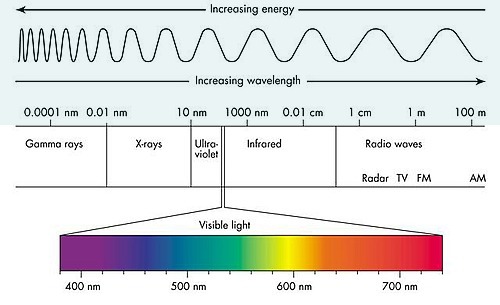
An arthroscope can be inserted into a knee joint through a very tiny incision to help a doctor examine the knee. A light is tran
inna [2205]

Example Response: The technology referenced is fiber optics. Their small size and flexibility allow doctors to visualize areas that would otherwise require surgical intervention to examine.

4 0
7 days ago
Read 2 more answers
An engine performs 2700 J of work on a scooter. The scooter and rider have a combined mass of 150 kg. If the scooter started at
serg [2593]
According to the principle of energy conservation, the engine's work in moving the scooter is converted into the scooter's kinetic energy, represented as:
6 0
7 days ago
Un tren parte de la ciudad A, a las 8 h. con una velocidad de 50 km/h, para llegar a la ciudad B a las 10 h. Allí permanece dura
Keith_Richards [2248]

Response:

AB = 100 km; BC = 80 km; AC = 180 km

Time of arrival = 11:30

Reasoning:

1. Distance from A to B

(a) Duration of travel

Duration = 10:00 - 8:00 = 2.00 hours

(b) Distance

Distance = speed × time = 50 km/h × 2.00 h = 100 km

2. Distance from B to C

Distance = 80 km/h × 1 h = 80 km

3. Summary of Distances

AB = 100 km

BC = 80 km

AC = 180 km

4. Time of Arrival

Departure from A = 08:00

Travel duration to B = 2:00

Arrival at B = 10:00

Waiting time at B = 0:30

Departure from B = 10:30

Travel duration to C = 1:00

Arrival at C = 11:30

8 0
1 month ago
An air hockey game has a puck of mass 30 grams and a diameter of 100 mm. The air film under the puck is 0.1 mm thick. Calculate
inna [2205]

Answer:

the time it takes after impact for the puck is 2.18 seconds

Explanation:

initially given information

mass = 30 g = 0.03 kg

diameter = 100 mm = 0.1 m

thickness = 0.1 mm = 1 ×10^{-4} m

dynamic viscosity = 1.75 ×10^{-5} Ns/m²

temperature of air = 15°C

to determine

time needed for the puck to reduce its speed by 10%

solution

we note that velocity changes from 0 to v

assuming initial velocity = v

therefore final velocity = 0.9v

implying a change in velocity is du = v

and clearance dy = h

shear stress acting on the surface is expressed as

= µ \frac{du}{dy}

therefore

= µ \frac{v}{h}............1

substituting the values

= 1.75 ×10^{-5} × \frac{v}{10^{-4}}

= 0.175 v

the area between the air and puck is given by

Area = \frac{\pi }{4} d^{2}

area = \frac{\pi }{4} 0.1^{2}

area = 7.85 × \frac{v}{10^{-3}} m²

thus, the force on the puck can be represented as

Force = × area

force = 0.175 v × 7.85 × 10^{-3}

force = 1.374 × 10^{-3} v

now applying Newton's second law

force = mass × acceleration

- force = mass \frac{dv}{dt}

- 1.374 × 10^{-3} v = 0.03 \frac{0.9v - v }{t}

solving for t = \frac{0.1 v * 0.03}{1.37*10^{-3} v}

the time needed after impact for the puck is 2.18 seconds

3 0
26 days ago
Other questions:
  • Each plate of a parallel-plate capacator is a square with side length r, and the plates are separated by a distance d. The capac
    13·1 answer
  • In pulling two identical carry-on bags through the airport, Mr. Myers and his 13 year old grandson, Vincent, do the same amount
    15·1 answer
  • Imagine you are riding on a yacht in the ocean and traveling at 20 mph. You then hit a golf ball at 100 mph from the deck of the
    6·2 answers
  • A current of 0.001 A can be felt by the human body. 0.005 A can produce a pain response. 0.015 A can cause a loss of muscle cont
    9·1 answer
  • In the demolition of an old building, a 1,300 kg wrecking ball hits the building at 1.07 m/s2. Calculate the amount of force at
    15·2 answers
  • In a computer-based experiment to study diffraction, the width of the central diffraction peak is 15.20 mm. The wavelength of th
    6·1 answer
  • Which graph represents the motion of an object traveling with a positive velocity and a negative acceleration?
    5·2 answers
  • The ultimate source of energy that powers the Sun is__________.
    15·2 answers
  • The speed of sound in air changes with the temperature. When the temperature T is 32 degrees Fahrenheit, the speed S of sound is
    7·1 answer
  • A cell membrane consists of an inner and outer wall separated by a distance of approximately 10nm. Assume that the walls act lik
    9·1 answer
Add answer
Login
Not registered? Fast signup
Signup
Login Signup
Ask question!