answer.
Ask question
Login Signup
Ask question
All categories
  • English
  • Mathematics
  • Social Studies
  • Business
  • History
  • Health
  • Geography
  • Biology
  • Physics
  • Chemistry
  • Computers and Technology
  • Arts
  • World Languages
  • Spanish
  • French
  • German
  • Advanced Placement (AP)
  • SAT
  • Medicine
  • Law
  • Engineering
andriy
5 days ago
7

A paper in the journal Current Biology tells of some jellyfish-like animals that attack their prey by launching stinging cells i

n one of the animal kingdom's fastest movements. High-speed photography showed the cells were accelerated from rest for 700 ns at 5.30 ✕ 107 m/s2. Calculate the maximum speed reached by the cells and the distance traveled during the acceleration.
Physics
1 answer:
Yuliya22 [2.4K]5 days ago
3 0
Given that, the starting speed of the cells is 0 since they were at rest. The cell's acceleration is specified, along with time t = 700 ns. We aim to calculate the peak speed achieved by the cells and the distance covered during the acceleration. Let v signify the final velocity. Let d represent the distance traversed. We'll apply the equations of motion to find the solution.
You might be interested in
2. An airplane traveling north at 220. meters per second encounters a 50.0-meters-per-second crosswind
Yuliya22 [2420]

The speed resulting from the plane is (3) 226 m/s

Reasoning:

We can determine the plane's resultant speed using the Pythagorean Theorem because the two speeds form a right angle (creating a right triangle).

Thus, the computation is as follows:

ResultantSpeed=\sqrt{VerticalSpeed^{2}+HorizontalSpeed^{2}}\\\\ResultantSpeed=\sqrt{(220\frac{m}{s})^{2}+50\frac{m}{s})^{2}

ResulntantSpeed=\sqrt{48400\frac{m^{2} }{s^{2} }+2500\frac{m^{2} }{s^{2} } } \\\\ResultantSpeed=\sqrt{50900\frac{m^{2} }{s^{2} }}=226\frac{m}{s}

Consequently, the plane's resultant speed is (3) 226 m/s

Have a wonderful day!

5 0
18 days ago
The surface is tilted to an angle of 37 degrees from the horizontal, as shown above in Figure 3. The blocks are each given a pus
inna [2205]

Answer:

Incomplete question: "Each block has a mass of 0.2 kg"

The velocity of the center of mass for the two-block system just prior to their collision is 2.9489 m/s

Explanation:

Provided information:

θ = angle of the surface = 37°

m = mass of each block = 0.2 kg

v = speed = 0.35 m/s

t = collision time = 0.5 s

Question: What is the velocity of the center of mass for the two-block system right before the blocks collide, vf =?

Change in momentum:

delta(P)=F*delta(t)

P_{f} -P_{i}=F*delta(t)

2m(v_{f} -v_{i})=F*delta(t)

v_{i} =0.35-0.35=0

It’s essential to calculate the required force:

F=(m+m)*g*sin\theta

Here, g = acceleration due to gravity = 9.8 m/s²

F=(0.2+0.2)*9.8*sin37=2.3591N

v_{f} =\frac{F*delta(t)}{2m} =\frac{2.3591*0.5}{2*0.2} =2.9489m/s

6 0
20 days ago
An ideal gas is allowed to expand isothermally from 2.00 l at 5.00 atm in two steps:
Sav [2226]

Heat supplied to the gas = Q = 743 Joules

Work applied to the gas = W = -743 Joules

\texttt{ }

Additional explanation

The Ideal Gas Law that should be remembered is:

\large {\boxed {PV = nRT} }

P = Pressure (Pa)

V = Volume (m³)

n = number of moles (moles)

R = Gas Constant (8.314 J/mol K)

T = Absolute Temperature (K)

Now, let’s proceed with the problem!

\texttt{ }

Given:

Initial volume of the gas = V₁ = 2.00 L

Initial pressure of the gas = P₁ = 5.00 atm

Unknown:

Work done on the gas = W =?

Heat supplied to the gas = Q =?

Solution:

Step A:

An ideal gas expands isothermally:

P_1V_1 = P_2V_2

5.00 \times 2.00 = 3.00 \times V_2

V_2 = 10 \div 3

V_2 = 3\frac{1}{3} \texttt{ L}

\texttt{ }

Next, we will determine the work performed on the gas:

W_A = -P_2(V_2 - V_1)

W_A = -3.00(3\frac{1}{3} - 2.00)

W_A = \boxed{-4 \texttt{ L.atm}}

\texttt{ }

Step B:

By utilizing the methodology mentioned earlier:

P_2V_2 = P_3V_3

3.00 \times 3\frac{1}{3} = 2.00 \times V_3

V_3 = 10 \div 2

V_3 = 5 \texttt{ L}

\texttt{ }

Next, we will ascertain the work completed on the gas:

W_B = -P_3(V_3 - V_2)

W_B = -2.00(5 - 3\frac{1}{3})

W_B = \boxed{-3\frac{1}{3} \texttt{ L.atm}}

\texttt{ }

Ultimately, we can calculate the total work done and heat supplied as follows:

W = W_A + W_B

W = -4 + (-3\frac{1}{3})

W = -7\frac{1}{3} \texttt{ L.atm}

W = -7\frac{1}{3} \times 101.33 \texttt{ J}

\boxed{W \approx -743 \textt{ J}}

\texttt{ }

\Delta U = Q + W

0 = Q + (-743)

\boxed{Q = 743 \texttt{ J}}

\texttt{ }

Learn more

  • Minimum Coefficient of Static Friction:
  • The Pressure In A Sealed Plastic Container:
  • Effect of Earth’s Gravity on Objects:

\texttt{ }

Answer details

Grade: High School

Subject: Physics

Chapter: Pressure

5 0
2 days ago
Marcia is given an incomplete chemical equation that includes the number of nitrogen atoms present in the products of the reacti
ValentinkaMS [2425]
If the products have three nitrogen atoms, the reactants must have had the same quantity, as mass is conserved in a chemical reaction.
8 0
2 days ago
Read 2 more answers
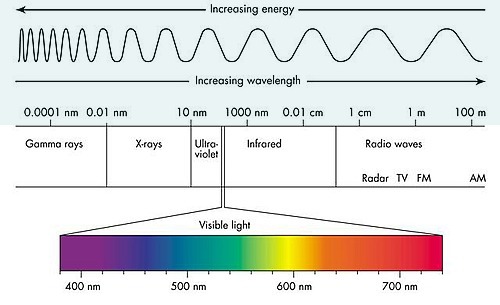
Radiation emitted from human skin reaches its peak at λ = 940 µm. (a) What is the frequency of this radiation? (b) What type of
inna [2205]

Answer:

a) The frequency is 3.191x10^11.

b) The type of radiation is microwave radiation.

c) The energy of one quantum of this radiation amounts to 1.32x10^-3ev.

Explanation:

For further details and calculations, please refer to the image below.

8 0
26 days ago
Other questions:
  • A cart moves along a track at a velocity of 3.5 cm/s. when a force is applied to the cart, its velocity increases to 8.2 cm/s. i
    15·2 answers
  • Soot particles ("black carbon aerosols" generally cause ________ of earth's atmosphere by ________ solar energy.
    10·1 answer
  • Numerous engineering and scientific applications require finding solutions to a set of equations. Ex: 8x + 7y = 38 and 3x - 5y =
    5·2 answers
  • If the position of an object is zero at one instant, what is true about the velocity of that object?
    7·1 answer
  • A steel casting weighing 2 kg has an initial temperature of 500°c; 25 kg of water initially at 25°c is contained in a perfectly
    12·2 answers
  • Which statements correctly describe forces? Check all that apply.
    10·2 answers
  • On the assumption that copper– nickel alloys are random mixtures of copper and nickel atoms, calculate the mass of copper which,
    13·1 answer
  • An overhang hollow shaft carries a 900 mm diameter pulley, whose centre is 250 mm from the centre of the nearest bearing. The we
    10·1 answer
  • An engine performs 2700 J of work on a scooter. The scooter and rider have a combined mass of 150 kg. If the scooter started at
    15·1 answer
  • A 0.5 kg cheeseburger is lobbed at a particularly unhappy customer with a force of 10 N. While it is being thrown, what is the a
    5·1 answer
Add answer
Login
Not registered? Fast signup
Signup
Login Signup
Ask question!