answer.
Ask question
Login Signup
Ask question
All categories
  • English
  • Mathematics
  • Social Studies
  • Business
  • History
  • Health
  • Geography
  • Biology
  • Physics
  • Chemistry
  • Computers and Technology
  • Arts
  • World Languages
  • Spanish
  • French
  • German
  • Advanced Placement (AP)
  • SAT
  • Medicine
  • Law
  • Engineering
Andreyy89
13 days ago
14

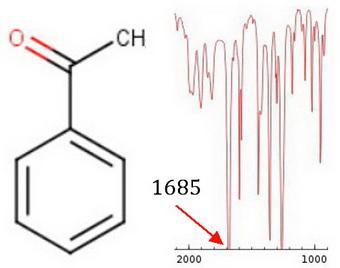
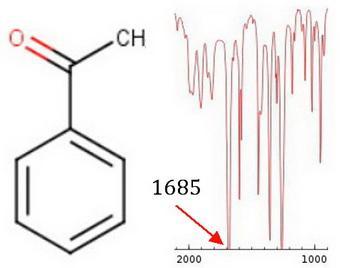
Substitution of an amino group on the para position of acetophenone shifts the cjo frequency from about 1685 to 1652 cm−1 , wher

eas a nitro group attached to the para position yields a cjo frequency of 1693 cm−1 . explain the shift for each substituent from the 1685 cm−1 base value for acetophenone

Chemistry
1 answer:
Alekssandra [3K]13 days ago
6 0

Response:

This is my analysis.

Explanation:

The frequency of a vibration is influenced by the strength of the bond (the force constant).

A stronger bond demands more energy for vibration, resulting in an increase in both the frequency (f) and the wavenumber.

Acetophenone

Resonance impacts with the aromatic ring modify the C=O bond in acetophenone, giving it a varying single and double bond character, with the bond frequency measuring 1685 cm⁻¹.

p-Aminoacetophenone

The +R influence of the amino group enhances the single-bond characteristic of the C=O bond. As a result, the bond length increases, leading to a reduction in strength.

Subsequently, the vibrational energy diminishes, causing the wavenumber to decrease to 1652 cm⁻¹.

p-Nitroacetophenone

The nitro group introduces a partial positive charge on C-1. The -I effect takes away electrons from the acetyl group.

As electron density shifts towards C-1, the double bond character of the C=O bond increases.

This results in a decrease in bond length, thus increasing bond strength, causing the wavenumber to rise to 1693 cm⁻¹.

You might be interested in
Help on part "c": The forensic technician at a crime scene has just prepared a luminol stock solution by adding 19.0g of luminol
lions [2927]

1. The luminol stock solution has a molarity of 1.431 M.

2. In 2.00 L of the diluted spray, there are 0.12 moles of luminol.

3. The volume of the stock solution from Part A that contains the same number of moles present in the diluted solution from Part B is 83.86 ml.

Additional Information

Stoichiometry in Chemistry focuses on the quantitative aspects of chemical reactions, which includes calculations related to volume, mass, and the count of ions, molecules, and elements.

Key concepts in stoichiometry include:

  • 1. Relative atomic mass
  • 2. Relative molecular mass

This refers to the relative atomic mass of a molecule.

  • 3. Mole

A mole represents the number of particles in a substance equivalent to the number of atoms in 12 grams of carbon-12.

1 mole = 6.02 × 10²³ particles.

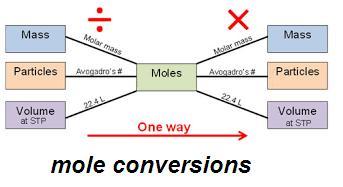
The quantity of moles can also be derived by dividing mass (in grams) by either the relative mass of an element or the relative mass of a molecule.

\large{\boxed{\bold{mol\:=\:\frac{grams}{ relative\:mass} }}}

Luminol (C₈H₇N₃O₂) is utilized for detecting blood traces at crime scenes, due to its reaction with iron found in blood.

To prepare a luminol stock solution, 19.0 g of luminol is mixed into a total volume of 75.0 mL of water.

Thus, the molarity is calculated as:

  • 1. Moles of Luminol

- the relative molecular mass of Luminol:

= 8.C + 7.H + 3.N + 2.16

= 8.12 + 7.1 + 3.14 + 2.16

= 177 grams/mol.

Thus, we have:

moles = grams / relative molecular mass.

mole=\frac{19}{177}

moles = 0.1073.

2. Molarity (M)

M = moles / volume

M\:=\:{\frac{ 0.1703 }{75.10^{-3} L}

M = 1.431.

  • b. The concentration of luminol in the spray bottle is 6.00 × 10⁻² M. Therefore, in a 2 L solution, the number of moles is:

moles = M × volume

moles = 6 × 10⁻² × 2

moles = 0.12.

  • c. The molarity of the stock solution (Part A) is 1.431 M.

The diluted solution (Part B) contains 0.12 moles of luminol.

To find the volume of the stock solution (Part A) that has the same moles as the diluted solution (Part B):

volume = moles / M

volume\:=\:\frac{0.12}{1.431}

volume = 0.08386 L = 83.86 mL.

Further Learning

moles of water you can generate

the amount of each atom in the chemical's formula

the proportion of hydrogen to oxygen atoms in 2 L of water

Keywords: mole, volume, molarity, Luminol, relative molecular mass
6 0
1 month ago
Read 2 more answers
what is the net ionic equation with its physical states? (NH4)2CO3(aq)+Ca(ClO4)2(aq)⟶CaCO3(s)+2NH4ClO4(aq)
lions [2927]

Answer: The net ionic equation is CO_3^{2-}(aq)+Ca^{2+}(aq)\rightarrow CaCO_3(s)

Explanation:

A double displacement reaction involves the exchange of ions. Chemicals that dissolve in water are marked with the symbol (aq), while those that do not dissolve and remain solid are shown with (s) after their formulas.

(NH_4)_2CO_3(aq)+Ca(ClO_4)_2(aq)\rightarrow CaCO_3(s)+2NH_4ClO_4(aq)

The ion-based representation of the equation is:

2NH_4^+(aq)+CO_3^{2-}(aq)+Ca^{2+}(aq)+2ClO_4^{-}(aq)\rightarrow CaCO_3(s)+2NH_4^{+}(aq)+2ClO_4^-(aq)

"Spectator ions" are the ions that do not participate in the chemical reaction, appearing on both sides of the equation in ionic form.

Ammonium and chlorate ions are present on both sides; thus, they do not factor into the net ionic equation.

Therefore, the net ionic equation is:

CO_3^{2-}(aq)+Ca^{2+}(aq)\rightarrow CaCO_3(s)

6 0
1 month ago
If the density of carbon tetrachloride is 1.59 g/ml, what is the volume in l, of 4.21 kg of carbon tetrachloride
Tems11 [2777]

Density is defined as the mass-to-volume ratio. The formula for density can be expressed as:

density = \frac{mass}{volume}    -(1)

The density for carbon tetrachloride is provided as 1.59 g/ml   (given).

The mass of carbon tetrachloride is 4.21 kg   (as given).

Since, 1 kg = 1000 g

Thus, 4.21 kg = 4210 g

Utilizing the values in formula (1):

1.59 g/mL = \frac{4210 g}{volume}

volume = \frac{4210 g}{1.59 g/mL}

volume = 2647.799 mL

Since, 1 mL = 0.001 L

Hence, 2647.799 mL = 2.65 L

The resulting volume of carbon tetrachloride is 2.65 L.


6 0
1 month ago
The volume of the ideal gas in the container is 9 m3. What would the volume be if four more blocks were placed on top of the lid
castortr0y [3046]
Response:
             4.5 m³

Resolution:
              The statement indicates the presence of two blocks on a lid of a container with a volume of 9 m³. The lid's weight is equal to that of the two blocks. Thus, there were initially four blocks (or 4 atm pressure) acting on a volume of 9 m³.

After adding four additional blocks on the lid, the pressure rises from 4 atm to 8 atm (2 atm from the lid, 2 atm from the original blocks, and 4 atm from the new blocks).

Hence, The data established is,

                  P₁  =  4 atm

                  V₁  =  9 m³

                  P₂  =  8 atm

                  V₂  =?

Using Boyle's Law,

                               P₁ V₁  =  P₂ V₂

Resolving for V₂,
                               V₂  =  P₁ V₁ / P₂

Substituting values yields:
                               V₂  =  (4 atm × 9 m³) ÷ 8 atm

                               V₂  =  4.5 m³
0 0
1 month ago
What is the correct name for the covalent compound N3Se5?
castortr0y [3046]

Result:

I believe it’s called Trinitrogen Pentaseleniumide

Explanation:

Tri means three

Penta means five

The second element concludes with -ide

6 0
1 month ago
Other questions:
  • The density of air under ordinary conditions at 25°C is 1.19 g/L. How many kilograms of air are in a room that measures 10.0 ft
    9·2 answers
  • The graph above shows the changes in temperature recorded for the 2.00 l of h2o surrounding a constant-volume container in which
    9·1 answer
  • Calculate the pressure of O2 (in atm) over a sample of NiO at 25.00°C if ΔG o = 212 kJ/mol for the reaction. For this calculatio
    7·1 answer
  • The table shows the amount of radioactive element remaining in a sample over a period of time.
    5·1 answer
  • Which statement describes characteristics of a 0.01 M KOH(aq) solution? 1. The solution is acidic with a pH less than 7. 2. The
    11·1 answer
  • An ice cube at 0.00 ˚C with a mass of 8.32 g is placed into 55 g of water, initially at 25 ˚C. If no heat is lost to the surroun
    7·1 answer
  • A 250. ml sample of 0.0328m hcl is partially neutralized by the addition of 100. ml of 0.0245m naoh. find the concentration of h
    12·1 answer
  • A buffer is prepared by mixing hypochlorous acid ( HClO ) and sodium hypochlorite ( NaClO ) . If a strong base, such as NaOH , i
    10·1 answer
  • A car tire has a pressure of 2.38 atm at 15.2 c. If the pressure inside reached 4.08 atm, the tire will explode. How hot would t
    12·1 answer
  • Compounds A and B are colorless gases obtained by combining sulfur with oxygen. Compound A results from combining 6.00 g of sulf
    7·1 answer
Add answer
Login
Not registered? Fast signup
Signup
Login Signup
Ask question!