answer.
Ask question
Login Signup
Ask question
All categories
  • English
  • Mathematics
  • Social Studies
  • Business
  • History
  • Health
  • Geography
  • Biology
  • Physics
  • Chemistry
  • Computers and Technology
  • Arts
  • World Languages
  • Spanish
  • French
  • German
  • Advanced Placement (AP)
  • SAT
  • Medicine
  • Law
  • Engineering
pogonyaev
14 days ago
11

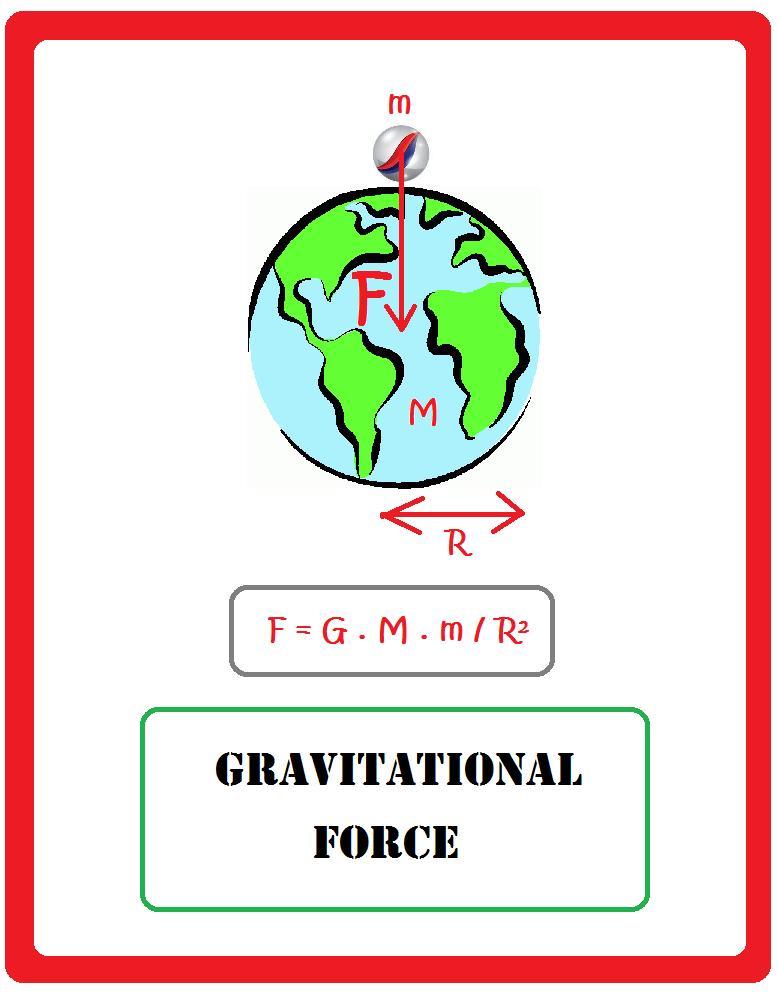
The gravitational force of a star on an orbiting planet 1 is f1. planet 2, which is three times as massive as planet 1 and orbit

s at twice the distance from the star, experiences gravitational force f2. part a what is the ratio f2f1? you can ignore the gravitational force between the two planets.

Physics
You might be interested in
In an isolated system, the total heat given off by warmer substances equals the total heat energy gained by cooler substances. N
Keith_Richards [3271]

Answer:

The temperature of the cooler object was nearly at room temperature. As a result, the system underwent minimal change

Explanation:

In a closed system with two objects at varying temperatures, heat energy typically flows from the hotter object to the cooler one. This transfer is more pronounced when there is a significant temperature disparity between the objects. Conversely, if the temperature difference is minor or negligible, the resulting change will be minimal.

3 0
2 months ago
An archer fires an arrow, which produces a muffled "thwok" as it hits a target. If the archer hears the "thwok" exactly 1 s afte
Ostrovityanka [3204]

Answer:

35.79 meters

Explanation:

We have an archer, and there is a target. Denote the distance between them as d.

The bowman releases the arrow, which travels the distance d at a velocity of 40 m/s until it hits the target. We establish the equation as:

v_{arrow} * t_{arrow} = d\\ \\40 \frac{m}{s} * t_{arrow} = d

Right after this, the arrow produces a muffled noise, traveling the same distance d at a speed of 340 m/s in time t_{sound}. Thus, we can derive:

v_{sound} * t_{sound} = d\\ \\340 \frac{m}{s} * t_{sound} = d.

Consequently, the sound reaches the archer, precisely 1 second post-firing the bow, resulting in:

t_{arrow} + t _{sound} = 1 s.

Using this relationship in the distance formula for sound allows us to write:

340 \frac{m}{s} * t_{sound} = d \\ \\ 340 \frac{m}{s} * (1 s- t_{arrow}) = d.

Substituting the value of d from the first equation yields:

40 \frac{m}{s} * t_{arrow} = d \\ 40 \frac{m}{s} * t_{arrow} = 340 \frac{m}{s} * (1 s- t_{arrow}).

Now, after some calculations, we can proceed further:

40 \frac{m}{s} * t_{arrow} = 340 \frac{m}{s} * 1 s - 340 \frac{m}{s} * t_{arrow} \\ \\ 40 \frac{m}{s} * t_{arrow} + 340 \frac{m}{s} * t_{arrow} = 340 m \\ \\ 380 \frac{m}{s} * t_{arrow} = 340 m \\ \\ t_{arrow} = \frac{340 m}{380 \frac{m}{s}} \\ \\ t_{arrow} = 0.8947 s.

Finally, the value is inserted into the initial equation:

40 \frac{m}{s} * t_{arrow} = d

40 \frac{m}{s} * 340/380 s = 35,79 s = d

6 0
3 months ago
Suppose that an owner of the same dog breed has also taken some measurements. They notice that the surface area of the dog has i
inna [3103]

Answer:

The surface area of the dog changes from A to 3A

Explanation:

It is stated that the dog's surface area has increased by a factor of 3 over four years.

We need to calculate the change in the relative surface area of the dog over this timeframe.

Let’s assume the initial surface area is A.

Since the surface area has been multiplied by 3,

it follows that the surface area after four years is equal to 3×A = 3A.

Thus, the dog's surface area transitions from A to 3A.

7 0
3 months ago
a pebble is dropped down a well and hits the water 1.5 seconds later. using the equations for motion with constant acceleration,
inna [3103]
Definamos h como la distancia que hay desde el borde del pozo hasta la superficie del agua (en metros).

Consideremos la gravedad g como 9.8 m/s² y despreciemos la resistencia del aire.

La velocidad inicial vertical del guijarro es nula.
Ya que el guijarro impacta el agua tras 1.5 segundos, entonces:
h = 0.5 * (9.8 m/s²) * (1.5 s)² = 11.025 m

Resultado: 11.025 m
7 0
4 months ago
Read 2 more answers
Lasers are classified according to the eye-damage danger they pose. Class 2 lasers, including many laser pointers, produce visib
kicyunya [3294]

Response:

a) 318.2 W/m^2

b) 2.5 x 10^-4 J

c) 1.55 x 10^-8 v/m

Reasoning:

The laser power P = 1 mW = 1 x 10^-3 W

duration t = 250 ms = 250 x 10^-3 s

Taking a beam diameter of 2 mm = 2 x 10^-3 m

therefore

the beam's cross-sectional area A = \pi d^{2} /4 = (3.142 x (2*10^{-3} )^{2})/4

A = 3.142 x 10^-6 m^2

a) The intensity I = P/A

where P refers to the laser's power

and A represents the beam's cross-sectional area

I = ( 1 x 10^-3)/(3.142 x 10^-6) = 318.2 W/m^2

b) The total energy delivered E =Pt

where P is the beam's power

and t is the exposure duration

E = 1 x 10^-3 x 250 x 10^-3 = 2.5 x 10^-4 J

c) The peak electric field can be computed as

E = \sqrt{2I/ce_{0} }

where I signifies the beam's intensity

and E is the electric field

c is the speed of light = 3 x 10^8 m/s

e_{0} = 8.85 x 10^9 m kg s^-2 A^-2

E = \sqrt{2*318.2/3*10^8*8.85*10^9} = 1.55 x 10^-8 v/m

6 0
2 months ago
Other questions:
  • An airplane pilot wishes to fly directly westward. According to the weather bureau, a wind of 75.0 km/hour is blowing southward.
    15·1 answer
  • Water, of density 1000 kg/m3, is flowing in a drainage channel of rectangular cross-section. The width of the channel is 15 m, t
    11·1 answer
  • A windowpane is half a centimeter thick and has an area of 1.0 m2. The temperature difference between the inside and outside sur
    12·1 answer
  • Two charges of magnitude 5nC and -2nC are placed at points (2cm,0,0) and
    5·1 answer
  • For some metal alloy, a true stress of 345 MPa (50040 psi) produces a plastic true strain of 0.02. How much will a specimen of t
    13·1 answer
  • Help..... :(
    11·2 answers
  • A certain alarm clock ticks four times each second, with each tick representing half a period. The balance wheel consists of a t
    15·1 answer
  • Suppose you want to make a scale model of a hydrogen atom. You choose, for the nucleus, a small ball bearing with a radius of 1.
    7·1 answer
  • Two pots are identical except that the flat bottom of one is aluminum, whereas that of the other is copper. Water in these pots
    12·1 answer
  • What is the magnitude of the force a 1.5 x 10⁻³ C charge exerts on a 3.2 x 10⁻⁴ C charge located 1.5 m away?
    8·1 answer
Add answer
Login
Not registered? Fast signup
Signup
Login Signup
Ask question!